
How many pictures of yourself are floating around the internet?
Think about the photos you’ve posted on social media, pictures from birthday parties, family gatherings or even photos someone else uploaded years ago.
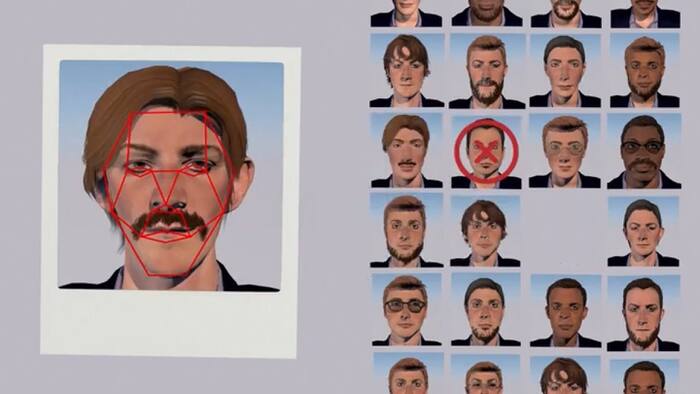
Now consider a computer system designed to search billions of online images and find possible matches to a person’s face.
That’s the technology Harris County was considering purchasing for the Sheriff’s Office at a cost of $288,000 for the first year.
The proposed agreement with Clearview AI, a facial recognition technology company, was scheduled for consideration during Harris County Commissioners Court’s Thursday, Nov. 19, meeting.
But the proposal was pulled before commissioners voted, leaving questions about why the county wanted the technology, how investigators would use the system and whether the purchase will return for consideration.
KPRC 2 reviewed the county’s purchasing documents and spoke with a University of Houston professor about the potential benefits and privacy concerns surrounding facial recognition technology.
Clearview AI operates a facial recognition search platform designed to compare an image of someone’s face against a database of online photographs.
According to Harris County’s purchasing documents, the database contains more than 70 billion online images.
Here’s an example of how investigators might use the system.
Suppose someone is captured on surveillance video during a robbery, but investigators don’t know the person’s identity.
Investigators might take a clear image of the person’s face and upload the picture into Clearview’s platform.
The system would search its database for similar faces and return potential matches, giving investigators possible leads to pursue.
Those results would not automatically establish someone’s identity or prove involvement in a crime. Investigators would still need to verify the information and gather supporting evidence.
The county’s proposal describes searches involving images of suspects, victims and people of interest.
The documents do not describe a plan to install cameras throughout Houston or continuously scan people walking down the street. The proposed purchase concerns an investigative platform for searching facial images.
The Sheriff’s Office was listed as the secondary department associated with the purchasing request, with the county’s Purchasing Department serving as the primary department.
The county’s explanation was brief.
Under a section titled “Expected Impact,” the request states:
“The tool assists investigators to identify suspects in cases where previously they had no leads.”
In other words, investigators wanted another way to identify people when traditional investigative methods had not produced an identification.
The proposal also connects the purchase to Harris County’s strategic goal of making the county safer and reducing violent crime.
Chris Bronk, a professor of public affairs at the University of Houston’s Hobby School of Public Affairs, said facial recognition technology presents a potential benefit for investigators, alongside questions about how the information would be used.
“Clearview is something that is certainly of concern, but also has a utility of sorts,” Bronk told KPRC 2.
Bronk said technology used to identify people raises questions about oversight, especially when investigators gain access to increasingly large collections of personal information.
The proposed agreement called for $288,000 in spending for the initial contract period.
According to the county’s documents, the agreement would have covered Nov. 19, 2026, through Nov. 18, 2027.
The proposal also included four optional one-year renewals.
Those renewal options would have allowed the county to consider continuing the service beyond the initial contract period. The agenda documents do not establish the total cost of all four possible renewals.
The funding was listed under the county’s existing General Fund budget.
The request did not identify a need for additional budget funding to cover the initial $288,000.
That distinction matters because the proposal involved spending money already included in the county’s budget, rather than asking commissioners to approve an entirely new budget allocation.
Commissioners still needed to authorize the proposed agreement.
Because the item was withdrawn before a vote, the proposed purchase was not approved at Thursday’s meeting.
One of the questions surrounding the proposal involves how Harris County planned to purchase the service.
The county requested what’s known as a sole-source exemption from competitive bidding requirements.
Competitive bidding generally gives multiple vendors an opportunity to compete for a government contract. A sole-source exemption permits a government agency to pursue a purchase without going through the usual competitive bidding process when the applicable requirements are met.
In this case, the county wanted authorization to enter directly into an agreement with Clearview AI.
The request was identified as a sole-source purchase in the Commissioners Court agenda.
That brings up an important question: What other options did Harris County consider before proposing a $288,000 agreement?
KPRC 2 reviewed the purchasing request, identified as Harris County File No. 26-7668.
The document includes a section titled “Alternative Options.”
The response consists of two letters:
“NA”
The request does not explain whether the county evaluated other facial recognition providers, compared different products or considered other approaches before selecting Clearview AI.
The brief response does not establish whether county officials conducted comparisons outside the information included in the request.
The documents also do not provide a specific estimate of how many additional criminal cases investigators expected to solve using the platform.
Those missing details raise questions about how the county would evaluate the proposed expenditure.
Bronk said public officials should consider whether the technology delivers measurable benefits for residents.
“What do you think the return on investment for public safety is?” Bronk asked.
For a $288,000 purchase, those questions include how often investigators would use the system, how successful the searches might be and how officials would measure the results.
Facial recognition technology raises questions extending beyond criminal investigations.
Unlike a fingerprint collected during an investigation, a person’s photograph might already be available online.
Someone might appear in a picture posted by a friend, a family member, an organization or another person without realizing the image is publicly accessible.
When facial recognition software searches large collections of those images, questions arise about how personal information is gathered, accessed and used.
Bronk said one concern involves the possibility of misuse by people who have permission to access investigative systems.
He described situations involving government databases where employees might search for information unrelated to legitimate work.
The issue, according to Bronk, is whether agencies have sufficient oversight to prevent improper searches.
He said an audit system would be an important safeguard, allowing officials to review who accessed the technology and why.
Such oversight might include examining repeated searches, determining whether investigators had legitimate reasons for using the system and identifying unusual patterns of activity.
The county’s agenda request does not provide a detailed explanation of what safeguards, access restrictions or auditing requirements would apply to the proposed Clearview platform.
That does not establish whether those safeguards were addressed in other contractual or departmental policies.
Another concern involves the possibility of an incorrect facial recognition match.
A system might identify a person whose appearance resembles the individual investigators are trying to find.
An incorrect match becomes especially concerning if investigators place too much confidence in the result without verifying the information independently.
Bronk said agencies need to consider the consequences when technology produces an incorrect result.
“The question I always ask with these systems is when it goes bad, when it fails, what happens?” he said.
He also expressed concern about investigators becoming overly dependent on automated systems and the possibility of incorrect information influencing criminal cases.
A facial recognition match should be treated as an investigative lead, rather than proof someone committed a crime.
The distinction is important because a search result alone does not establish guilt.
Not exactly.
Both technologies involve using cameras or images to help investigators identify information, but they serve different purposes.
Automated license plate readers, including systems associated with Flock Safety, focus on capturing and analyzing vehicle license plates.
Facial recognition systems focus on comparing human faces.
Bronk offered a simple comparison during his interview with KPRC 2:
“If Flock cameras are for cars, Clearview is for people.”
The comparison describes the different information each technology analyzes.
Harris County’s Clearview proposal specifically involved searching facial images against an online database, rather than installing a network of cameras to track people in real time.
The Clearview AI agreement appeared as Item 100 on the agenda for the Nov. 19 Commissioners Court meeting.
The proposed purchase was withdrawn before commissioners voted.
The available purchasing documents do not explain the reason for the withdrawal.
The withdrawal also does not establish whether county officials have abandoned the purchase entirely or intend to bring a revised agreement back for consideration.
For now, the $288,000 agreement has not received Commissioners Court approval.
Several questions remain about the proposed purchase and its future.
KPRC 2 is seeking clarification about why the proposal was withdrawn, whether the Sheriff’s Office intends to pursue the technology again and what policies would govern its use.
Other outstanding questions include whether alternative vendors were evaluated, how investigators would verify potential matches and how the county would measure the technology’s effectiveness.
The central issue involves balancing a potential investigative benefit against the financial cost, privacy concerns and need for oversight.
The Sheriff’s Office’s stated goal was to help investigators identify suspects in cases without leads.
Whether Harris County ultimately moves forward with Clearview AI, and under what conditions, has not been established.
KPRC 2 will continue following the proposal and seeking answers about the county’s plans.


